

Companies tend to prefer the indirect presentation to the direct method because the information needed to create this report is readily available in any accounting system. In fact, you don’t even need to go into the bookkeeping software to create this report. Let’s take a look at the format and how to prepare an indirect method cash flow statement.
- Understanding operating expenses can help you keep tabs on how efficiently your small business generates revenue.
- Think of it as a financial saga that sets the stage for the current period’s financial storytelling.
- Do not be concerned by a lack of complete comprehension at this juncture.
- Financial statements give a glimpse into the operations of acompany, and investors, lenders, owners, and others rely on theaccuracy of this information when making future investing, lending,and growth decisions.
- On January 1, 2021, Nova had 500,000 shares of $10 par value common stock and 50,000 shares of $100 par value preferred stock outstanding.
Include adjustments for prior periods

A summary of an entity’s results of operation for a specified period of time is revealed in the income statement, as it provides information about revenues generated and expenses incurred. The difference between the revenues and expenses is identified as the net income or net loss. Financial accounting seeks to directly report information for the topics noted in blue. Additional supplemental disclosures frequently provide insight about subjects such as those noted in red.
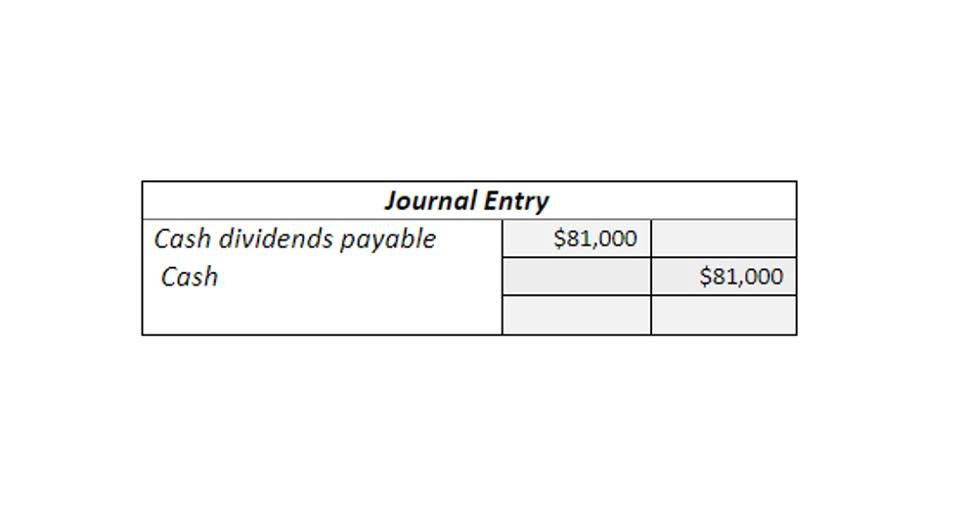
Subtract Dividends Paid
If you own a sole proprietorship, you’ll create statement of retained earnings a statement of owner’s equity instead of a statement of retained earnings. This is your opening balance and serves as the foundation for the current period’s statement. For example, if your retained earnings at the close of last year were $500,000, that’s your starting point.
Fueling Business Expansion
- This working is in effect an extract from the statement of changes in equity.
- To prepare the financial statements, a company will look at theadjusted trial balance for account information.
- In contrast, the statement of retained earnings shows how those profits—or losses—are allocated, reflecting how much is reinvested into the company or distributed as dividends.
- Before you can include the net income in your statement of retained earnings, you need to prepare an income statement.
- To get the numbers in these columns, you take the number in thetrial balance column and add or subtract any number found in theadjustment column.
The direct method is intuitive as it means the statement of cash flow starts with the source of operating cash flows. The operating cash outflows are payments for wages, to suppliers and for other operating expenses which are deducted. Investing activities cash flows are those that relate to non-current assets, including investments. This operating statement reveals how cash is generated and expended during a specific period of time.
- Properly preparing a statement of retained earnings can also help a company make informed decisions about its future and build trust with investors and other stakeholders.
- There is no adjustment in the adjustment columns, so theCash balance from the unadjusted balance column is transferred overto the adjusted trial balance columns at $24,800.
- The statement of retained earnings is mainly prepared for outside parties such as investors and lenders, since internal stakeholders can already access the retained earnings information.
- Retained earnings increase when profits increase; they fall when profits fall.
- Next, add the net income for the period to the beginning retained earnings.
- Dividends are taken away from the sum ofbeginning retained earnings and net income to get the endingretained earnings balance of $4,565 for January.
- When you understand the statement of retained earnings, you gain a tool to drive smarter reinvestments, enhance transparency, and strengthen trust.
- Looking at the income statement columns, we see that all revenue and expense accounts are listed in either the debit or credit column.
- You may notice that dividends are included in our 10-columnworksheet balance sheet columns even though this account is notincluded on a balance sheet.
- The statement of retained earnings provides valuable information to stakeholders, including investors, creditors, and management.
Retained earnings are primarily used for reinvestment into the company, funding new projects, R&D, expansion, reducing debts, or as a reserve for future opportunities or unexpected expenses. Conversely, cash on hand is the literal liquid assets—currency, bank account balances, easily accessible funds—that a company can quickly mobilize for immediate needs, emergencies, or opportunities. Walking through this example, it’s evident that Zippy Tech is maintaining a healthy cycle of profit reinvestment while also rewarding its shareholders. It demonstrates a balanced approach to managing earnings that can be conducive to sustainable growth. To ensure you have a crystal-clear understanding of the retained Bookkeeping for Consultants earnings calculation process, let’s walk through Zippy Tech’s example, step by step.

Report Beginning Retained Earnings
The company has worked hard throughout the year, leading to a well-earned net income bookkeeping of $10,000. Shareholders are not forgotten, as dividends amounting to $3,000 are paid out. So, $14,500 would be the final figure to strut onto your balance sheet, ready to roll into the next period’s retained earnings calculation. Your company could decide to reinvest the earnings back into the business instead. If you do pay out, it reflects in your retained earnings as a reduction, affecting your equity’s bottom line.